
Removing Damaged Vehicles From Collision Sites
Accident Recovery in Lindenhurst for vehicles disabled by collisions requiring controlled removal and transport to designated locations
Collision damage leaves vehicles in positions and conditions that prevent normal operation, often blocking traffic or sitting in locations where they cannot remain. Karstowing provides accident recovery for damaged vehicles that must be removed from collision sites and transported to repair facilities, storage locations, or other requested destinations throughout Long Island. Vehicle position, structural damage, fluid leaks, and surrounding traffic conditions determine how operators approach the recovery, select equipment, and execute the vehicle lift without causing additional frame stress or complicating existing damage.
Accident recovery addresses situations where impact damage has compromised the vehicle's ability to roll freely, where wheel alignment prevents normal towing, or where body damage interferes with standard attachment points. Operators assess whether the vehicle's frame can support towing forces at typical connection locations, whether wheels remain functional enough to roll during loading, and whether the vehicle's position requires winching before towing equipment can engage.
Call immediately after a collision when the vehicle cannot be driven and requires professional removal from the accident location.
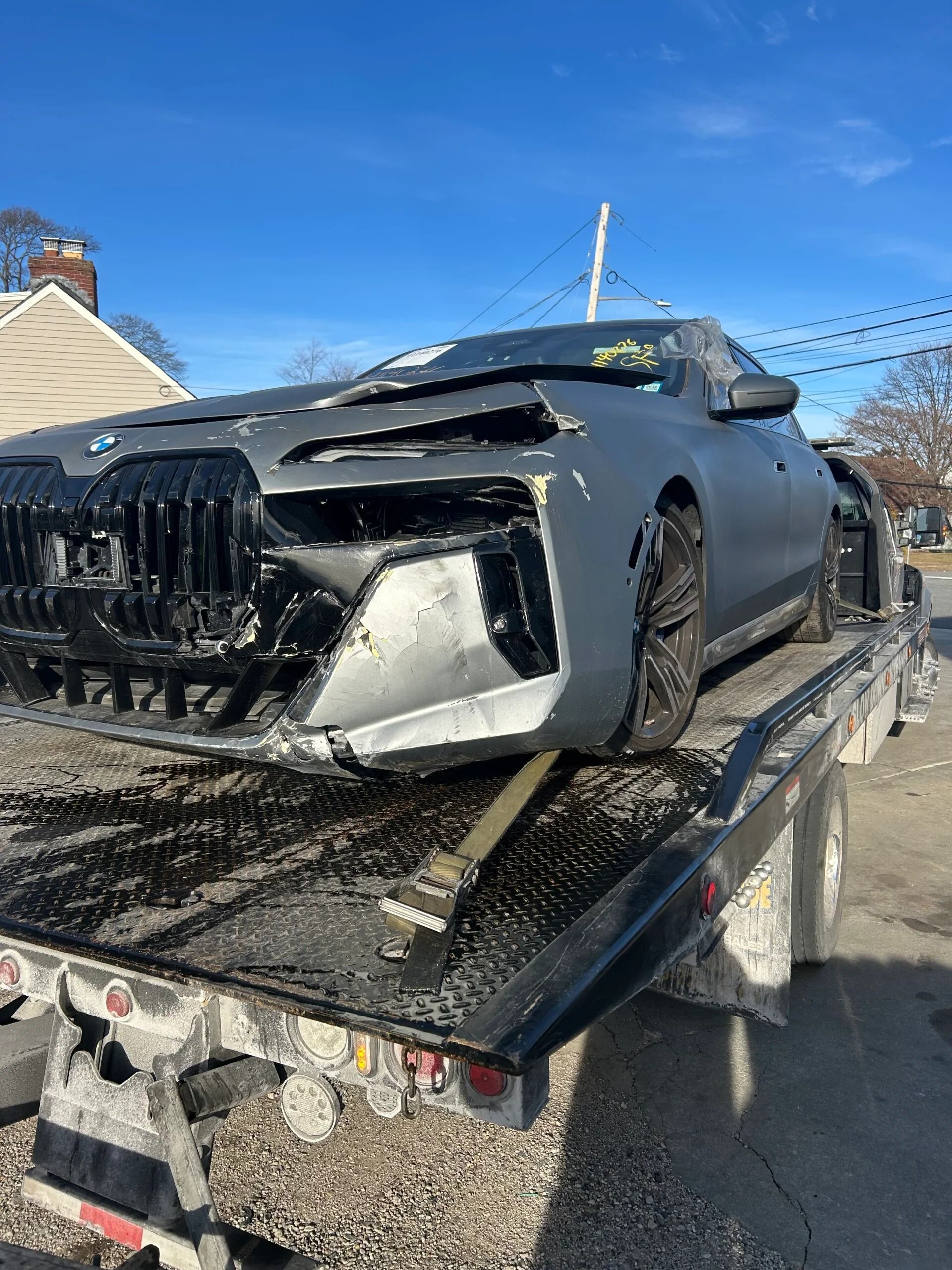
What Changes After Controlled Vehicle Handling
Recovery begins with evaluating collision damage to determine which towing attachment points remain structurally sound, whether the vehicle needs to be winched onto the tow truck bed or can be lifted conventionally, and how surrounding conditions affect equipment positioning. Operators avoid placing additional stress on damaged frame sections, use alternative rigging points when primary towing locations sustained impact damage, and coordinate vehicle movement to clear the roadway efficiently while maintaining control throughout the lift. Accident sites on major Long Island corridors require faster clearance to restore traffic flow, but recovery speed never compromises secure vehicle attachment or safe equipment operation.
After recovery, the vehicle reaches its destination without further damage from improper handling, with all collision-related damage documented before transport begins and matching the condition upon delivery. You receive confirmation of the destination facility, documentation of pre-existing damage, and verification that the vehicle was secured appropriately for its compromised structural state during transit.
The service covers on-site damage assessment for towing purposes, selection of appropriate equipment based on vehicle condition, and transport to a single requested destination. It does not include collision damage repair, coordination with insurance adjusters, or storage beyond initial delivery to the designated facility.
Answers to Frequent Service Questions
Vehicle owners involved in collisions often ask about recovery procedures, equipment decisions, and how damage affects the towing process.
What happens if the vehicle cannot roll after a collision?
Operators use winches and wheel dollies to move vehicles with locked wheels, collapsed suspensions, or tire damage that prevents rolling. The vehicle is pulled onto the tow truck bed or supported using equipment designed to lift and transport vehicles without functional wheels.
How does the vehicle's position affect recovery equipment selection?
Vehicles positioned off-road, against barriers, or in ditches require winching capabilities and recovery straps before towing equipment can engage. Standard tow trucks access vehicles on flat, stable surfaces, while confined or unstable positions demand additional rigging and equipment.
Why must collision damage be documented before transport?
Documentation establishes which damage existed before towing began, protecting both the vehicle owner and towing operator from disputes about whether damage occurred during the collision or during recovery and transport.
When should accident recovery be requested rather than attempting to drive the vehicle?
Request recovery when the vehicle will not start, steering or suspension damage prevents safe control, fluid leaks create hazards, or body damage interferes with wheel movement. Driving a collision-damaged vehicle risks additional mechanical failure, safety hazards, or legal violations.
What information helps operators prepare for accident recovery in Lindenhurst?
Provide the collision location, extent of visible damage, whether the vehicle is blocking traffic, and any access limitations such as guardrails, ditches, or narrow roadways that affect tow truck positioning and equipment deployment.
Karstowing responds to collision sites throughout Lindenhurst with equipment selected for the vehicle's condition and recovery environment. Reach Karstowing at (631) 520-3100 with accident location and vehicle status to coordinate recovery and destination transport.