
Transporting Vehicles Beyond Local Service Boundaries
Long Distance Towing in Lindenhurst for planned vehicle relocations and disabled vehicles requiring transport to distant repair facilities
A vehicle reaches its intended destination across state lines or hundreds of miles away through controlled transport that accounts for route planning, fuel logistics, and secure vehicle attachment throughout extended travel. Karstowing provides long distance towing for customers who need vehicles moved beyond typical local tow ranges, whether for planned relocations, breakdowns far from home, or transport to specialized repair facilities unavailable locally. The service connects Lindenhurst to destinations throughout the region and beyond, requiring confirmation of pickup location, destination address, and vehicle condition before transport begins.
Long distance towing differs from local recovery because extended highway travel introduces different stress patterns on towing equipment, requires fuel planning for both tow truck and any additional support needs, and demands verification that the receiving location can accept the vehicle upon arrival. Operators inspect towing connections more frequently during long hauls, monitor tire pressure and load distribution, and adjust travel speed to account for weather conditions and highway traffic patterns that change across different regions.
Discuss your vehicle's current location, intended destination, and preferred pickup timing to coordinate transport logistics.
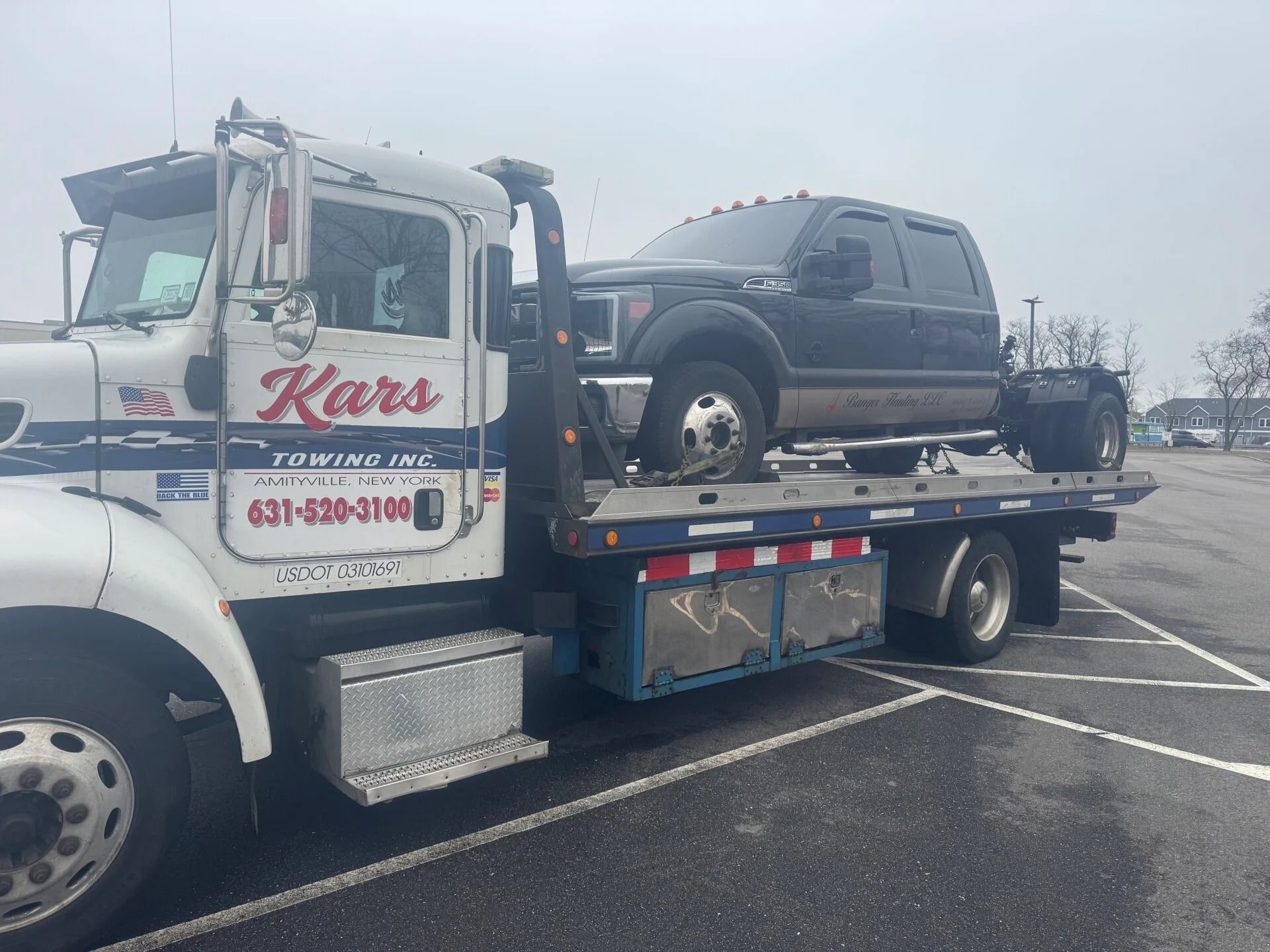
What Proper Long Distance Transport Requires
The transport process begins with verifying the destination facility's operating hours, confirming that the receiving location has adequate space for tow truck access, and documenting the vehicle's condition before departure. Operators secure the vehicle using attachment methods that remain stable over extended mileage, check that all connection points maintain proper tension, and plan routes that avoid low clearance bridges, weight-restricted roads, or areas where towing equipment faces access limitations.
You notice that the vehicle arrives at the destination without shifting during transit, with towing equipment showing consistent attachment throughout the journey, and with all documented pre-transport damage matching post-transport condition reports. The service ensures that vehicles remain secure during highway speed travel, that towing connections do not loosen across varied road surfaces, and that destination delivery occurs within the planned time window adjusted for traffic and weather conditions.
Long distance towing includes route planning, periodic connection inspections during travel, and destination delivery coordination. The service does not include vehicle storage at interim locations, repairs performed during transport, or modifications to the destination address after transport has begun.
Questions Before Starting Your Transport
Customers arranging long distance vehicle moves typically ask about timing, route decisions, and how vehicle condition affects transport planning.
How is the transport route determined for a long distance tow?
Operators select routes based on highway access, bridge clearance limits, weight restrictions, and fuel availability along the planned path. Routes avoid roads that prohibit towed vehicles, areas with known construction delays, and passages where tow truck maneuverability becomes limited.
What preparation does the vehicle need before long distance transport?
Vehicles should have personal items removed, loose exterior components secured or removed, and any fluid leaks documented before transport begins. Operators verify that tire inflation and suspension condition will withstand extended towing forces during highway travel.
Why does destination confirmation matter before transport starts?
Confirming the receiving facility's hours, physical address, and whether they expect the vehicle prevents situations where the tow truck arrives at a closed location, incorrect address, or facility unable to accept delivery, which extends transport time and increases costs.
How do Long Island departures affect transport timing?
Traffic patterns exiting Long Island, bridge and tunnel access points, and highway connections to major interstate routes influence departure timing and estimated arrival windows, particularly during peak travel periods or when weather affects regional road conditions.
What happens if the vehicle becomes unstable during transport?
Operators stop at safe locations to inspect towing connections, adjust attachment points if load shifting occurs, and modify travel speed or route if road conditions create excessive stress on towing equipment or vehicle attachment points.
Karstowing coordinates long distance vehicle transport with route planning tailored to your destination and vehicle specifications. Call (631) 520-3100 with pickup location, destination details, and vehicle information to arrange transport scheduling and confirm logistics.