Vehicles That Demand Specialized Recovery Equipment
Heavy Duty Towing in Lindenhurst for commercial vehicles, oversized equipment, and situations where standard tow trucks lack the capacity
Karstowing handles heavy duty towing for vehicles that exceed the limits of standard light duty equipment, operating throughout Lindenhurst and Long Island. The service addresses situations where vehicle weight, size, or position requires equipment with greater lifting capacity, reinforced towing arms, and specialized rigging. Operators assess vehicle dimensions, weight distribution, and recovery access before selecting the appropriate towing configuration.
Heavy duty towing becomes necessary when a vehicle's gross weight, axle configuration, or physical condition demands equipment designed to manage loads beyond typical passenger vehicles. The decision to deploy heavy duty equipment depends on whether the vehicle's frame can withstand standard towing forces, whether ground clearance allows conventional wheel lifts, and whether the recovery site provides adequate space for larger tow trucks to maneuver.
Call with vehicle type, approximate weight, and current location to determine the equipment needed for safe transport.
How Equipment Selection Affects Vehicle Recovery
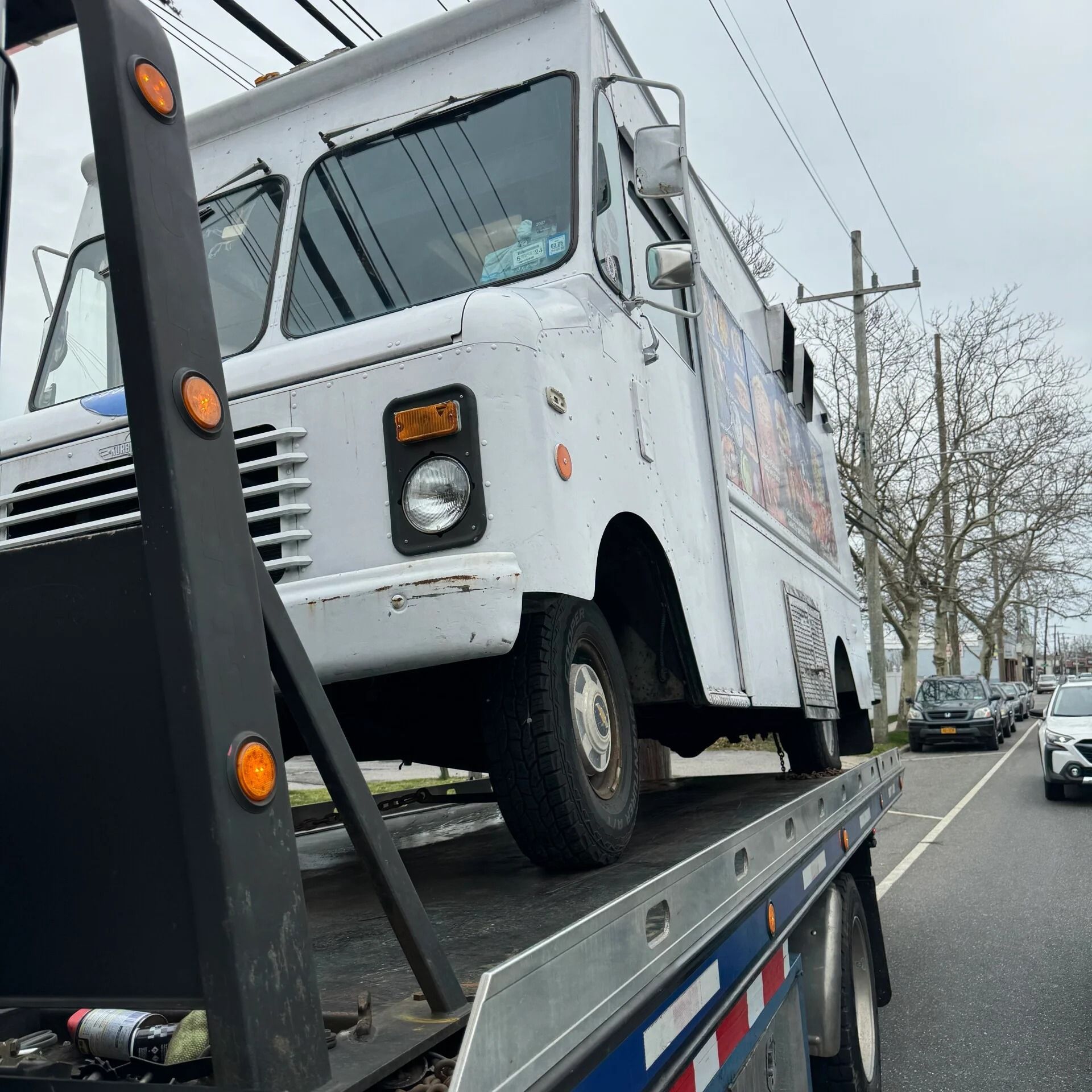
The towing approach begins with evaluating whether the vehicle's weight distribution, chassis condition, and recovery environment permit a controlled lift and secure attachment. Heavy duty equipment uses reinforced towing arms rated for higher weight limits, hydraulic systems that distribute lifting force evenly across the vehicle's frame, and wheel assemblies designed to handle the additional load during transport. Operators position the tow truck to align with the vehicle's center of gravity, attach rigging points to structural frame members rather than cosmetic panels, and verify that all connection points remain secure before initiating the lift.
After recovery, you notice that the vehicle reaches its destination without additional frame stress, body panel damage from improper rigging, or shifting during transit. Karstowing secures the vehicle using multiple attachment points, adjusts towing equipment to accommodate uneven weight distribution, and monitors load stability throughout the transport route. Vehicles remain level during transport, and towing equipment maintains consistent contact with frame rails rather than allowing suspension components to bear the towing load.
The service includes on-site assessment of recovery conditions, equipment selection based on vehicle specifications, and coordinated communication with the destination facility. It does not include vehicle repair, collision damage assessment, or modifications to towing equipment beyond standard operating configurations.
What Commercial Operators Usually Ask
Customers managing larger vehicles often ask about equipment limitations, recovery timing, and how vehicle condition affects the towing approach.
What determines whether a vehicle requires heavy duty towing instead of standard equipment?
Vehicle weight, axle configuration, and chassis condition determine equipment requirements. Standard light duty equipment typically handles vehicles under a specific weight threshold, while heavy duty equipment becomes necessary when frame strength, gross vehicle weight, or lifting points exceed those limits.
How does vehicle position affect recovery timing?
Access limitations, ground stability, and surrounding obstacles influence how quickly operators can position equipment and secure the vehicle. Tight parking areas, soft ground conditions, and obstructed access points require additional setup time to ensure towing equipment remains stable during the lift.
What happens if the vehicle sustained damage before towing?
Operators assess structural integrity and adjust rigging points to avoid placing stress on compromised frame sections. Damaged vehicles may require alternative attachment methods, additional support straps, or modified lifting angles to prevent further chassis damage during recovery.
Why does Long Island commercial traffic increase the need for heavy duty services?
The volume of commercial vehicles traveling through Lindenhurst and surrounding areas means more frequent situations where larger vehicles experience mechanical failures, accidents, or positioning problems that standard tow trucks cannot address safely.
What information helps operators prepare the correct equipment?
Vehicle make, model, approximate weight, number of axles, and whether the vehicle is drivable or disabled allow operators to select appropriate towing gear before arriving on site, reducing recovery delays and equipment mismatches.
Karstowing responds to heavy duty recovery situations across Long Island with equipment selected for the specific vehicle and conditions. Provide vehicle details and your current location at (631) 520-3100 to coordinate appropriate recovery equipment and arrival timing.