
Transport Without Wheels on the Pavement
Flatbed Towing in Lindenhurst for vehicles requiring secure bed-mounted transport
Flatbed towing places the entire vehicle on the truck bed rather than towing it with two or four wheels rolling behind the tow vehicle, which eliminates drivetrain rotation, tire contact with the roadway, and the risk of additional mechanical strain during transport. Karstowing uses flatbed equipment for disabled vehicles, cars with transmission or axle damage, all-wheel-drive vehicles, and situations where clients prefer that no part of the vehicle remains on the ground during the trip. This method suits both local Lindenhurst moves and longer-distance transportation across Long Island when the vehicle cannot or should not roll.
The flatbed towing process involves tilting the truck bed to ground level or near-ground level, winching the vehicle onto the bed using a cable attached to the frame or tow points, and securing the vehicle with multiple tie-down straps or chains at each corner. Operators confirm that the parking brake is set, the transmission is in park or neutral as appropriate, and the steering wheel is secured to prevent movement during loading and unloading.
Request a flatbed tow estimate by describing the vehicle type, current location, and destination so the operator can confirm bed size and accessibility.
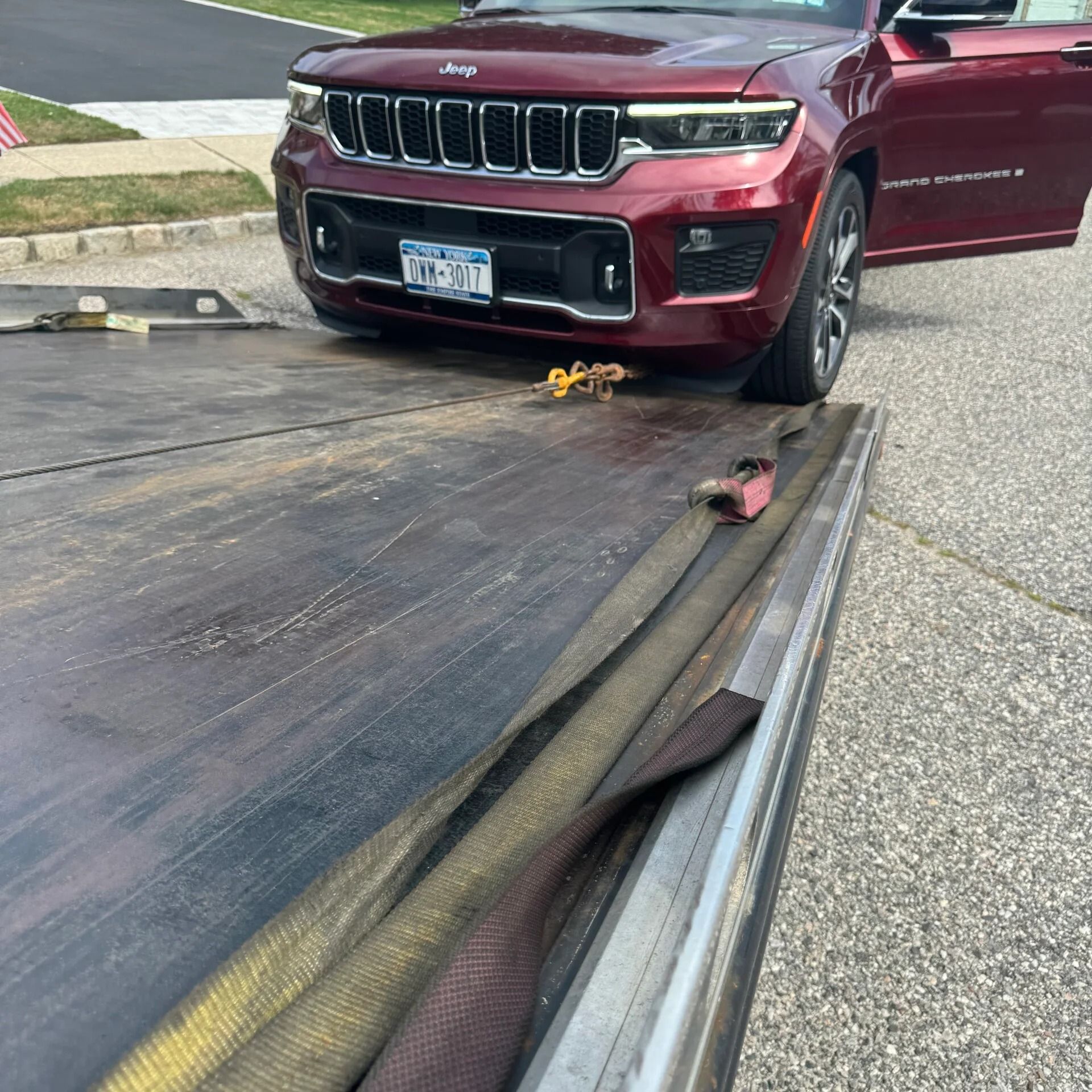
What Proper Flatbed Loading Requires
Proper flatbed loading requires confirming that the vehicle's ground clearance allows it to board the bed without scraping the front bumper or undercarriage, positioning the vehicle centrally on the bed to balance weight distribution, and tightening each tie-down strap to prevent shifting without over-tightening to the point of stressing suspension mounts. The operator inspects the vehicle before loading to identify low-hanging components, aftermarket modifications, or damage that might interfere with winching.
After flatbed transport is complete, you notice that the vehicle's tires show no additional wear, the odometer has not advanced, and there is no evidence of drivetrain engagement or undercarriage contact with the road surface. The vehicle is unloaded using controlled winch descent or by lowering the bed and driving the vehicle off if it is operational at the destination.
Flatbed towing works for vehicles up to the bed's weight and length capacity, which typically accommodates passenger cars, crossovers, and light trucks. Vehicles exceeding bed dimensions or weight limits require alternative equipment not covered by standard flatbed service.
Common Questions About Flatbed Transport
Flatbed towing offers specific advantages depending on vehicle condition and transport requirements. These answers address typical client concerns about the process.
What types of vehicles benefit most from flatbed towing?
Vehicles with all-wheel drive, those with damaged transmissions or axles, luxury or classic cars where owners prefer no wheel contact, and vehicles stuck in gear that cannot roll freely all benefit from flatbed transport.
How does the operator load a vehicle that cannot move under its own power?
The operator attaches a winch cable to designated tow points or the vehicle's frame, then uses the winch to pull the vehicle up the tilted bed while guiding it to prevent misalignment; the bed's angle reduces the force needed and minimizes scraping.
What happens if the destination is a residential driveway with limited clearance in Lindenhurst?
The operator assesses driveway width, overhead clearance from tree branches or garage doors, and turning radius before attempting delivery; if the flatbed cannot access the destination safely, the vehicle may be unloaded at the curb or nearest accessible point.
Why does flatbed towing cost more than wheel-lift towing in some cases?
Flatbed towing requires specialized equipment with hydraulic bed controls, higher fuel consumption due to vehicle weight on the bed, and longer loading and unloading times compared to wheel-lift hookups, all of which affect service pricing.
When should I request flatbed towing instead of standard towing methods?
Request flatbed towing when the vehicle has all-wheel drive, when drivetrain damage makes wheel rotation unsafe, when you are transporting a vehicle long distances and want to avoid mileage accumulation, or when the vehicle sits low to the ground and might scrape during wheel-lift towing.
Flatbed towing through Karstowing serves Lindenhurst, Bayshore Park, and other Long Island communities where careful vehicle transport matters. Contact (631) 520-3100 to discuss your vehicle's condition and confirm flatbed availability for your destination.