
Help When Your Vehicle Cannot Continue
Roadside Assistance in Lindenhurst for vehicles disabled on residential streets and busy corridors
A vehicle that stops running or develops a problem that prevents safe operation leaves drivers stranded on residential streets, commercial corridors, or highways where remaining in place creates exposure to traffic and delays other plans. Roadside recovery addresses situations where the vehicle requires evaluation and assistance before it can be moved, focusing on getting the car to a location where it can be properly inspected or repaired. Karstowing responds to calls throughout Lindenhurst and Long Island's heavily traveled routes when drivers face breakdowns that leave vehicles unable to continue under their own power.
Roadside recovery involves arriving at the disabled vehicle's location, assessing what caused the stoppage or mechanical issue, and determining whether the vehicle can be made temporarily drivable or requires towing to a repair facility. The operator evaluates warning lights, listens for unusual sounds from the engine or drivetrain, and checks for visible fluid leaks or damaged components that indicate the nature of the problem.
Call (631) 520-3100 with your vehicle's location, the symptoms you observed before it stopped, and the nearest cross street or landmark to help the operator reach you efficiently.
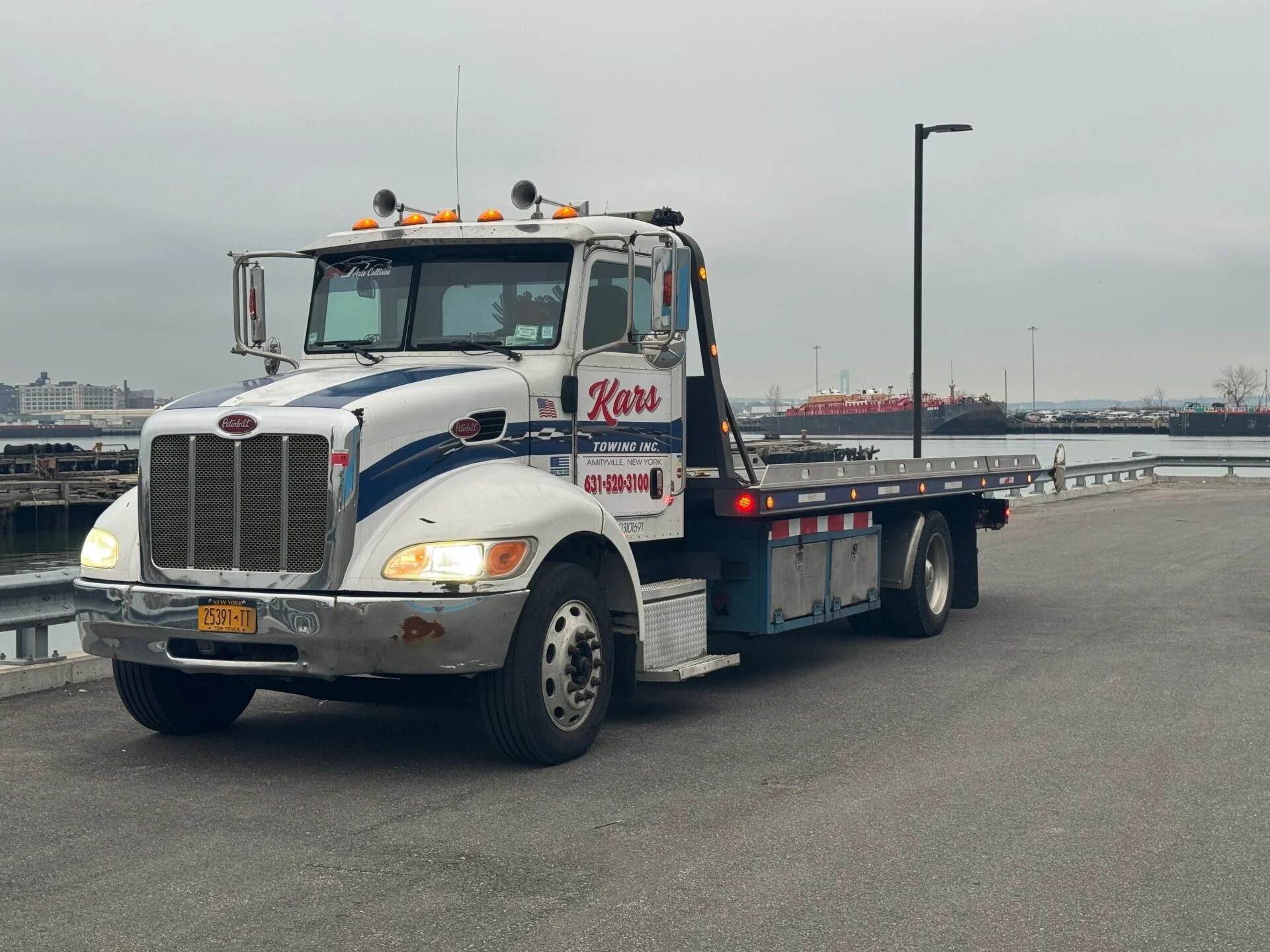
Why Vehicle Assessment Happens Before Recovery
Assessment before recovery prevents guessing about the appropriate response and ensures that the recovery method matches the vehicle's actual condition, which avoids wasted time and prevents additional damage from attempting to move a vehicle in the wrong way. The operator identifies whether the vehicle is stuck in gear, whether the steering is locked, and whether the wheels can roll freely, all of which determine the equipment and approach needed for safe removal.
Once roadside recovery is complete, you notice that your vehicle has been moved from the hazardous or inconvenient location to a place where it can be repaired or stored, reducing the risk of traffic citations or secondary incidents. The vehicle arrives in the condition it was found, with no attempts at field repairs that might complicate later diagnosis by a qualified mechanic.
Roadside recovery does not include diagnostic testing, parts replacement, or mechanical repairs performed at the scene. The service focuses on safely relocating the disabled vehicle to a repair shop or other destination you designate.
Answers to Frequent Service Questions
Drivers facing unexpected vehicle problems benefit from knowing what to expect during roadside recovery and how the process unfolds.
What should I do while waiting for roadside assistance to arrive?
Move to a safe location away from traffic if possible, turn on your hazard lights, and avoid attempting repairs yourself if you are unfamiliar with the vehicle's systems or if the roadway position is unsafe.
How does the operator decide whether to tow the vehicle or attempt another solution?
The operator checks whether the vehicle starts, whether it shifts into gear, whether warning lights indicate critical failure, and whether continuing to run the engine could cause further damage; if the vehicle cannot operate safely, towing is arranged.
What happens if my vehicle stops on a narrow residential street in Lindenhurst?
The operator positions the tow truck to minimize disruption to neighboring driveways and passing traffic, loads the vehicle as quickly as access allows, and moves it to a wider street or directly to the destination depending on equipment and clearance.
Why is roadside recovery different from emergency towing?
Roadside recovery emphasizes evaluating the vehicle's condition and determining the appropriate next step, while emergency towing focuses on immediate removal and transport; recovery may result in towing, but it begins with assessment rather than assuming towing is required.
When should I call for roadside assistance instead of trying to drive the vehicle to a repair shop?
Call for assistance when the engine overheats, when you hear grinding or knocking sounds that suggest internal damage, when the vehicle loses power steering or braking capability, or when dashboard warnings indicate critical system failure.
Karstowing provides roadside recovery across Lindenhurst and surrounding Long Island areas, responding to breakdowns on highways, side streets, and parking areas where vehicles become disabled. Reach the team at (631) 520-3100 to describe your vehicle, location, and the problem you are experiencing.